14 August 2009

A County Fair, A Pony, Babies, and a Wedding

I knew I had this picture somewhere. Organizing my bookshelves helped to find it. The 78th Edition of the Carnival of Genealogy is "Ride 'Em Cowboy - Share Your Pony Pictures." This event is sponsored by Jasia of the Creative Gene blog.

I don't always have the opportunity to participate in the various themes, special postings, carnivals, and other wonderful Geneablogger events but this one came at the perfect time. I will be participating in-person at a large event involving Geneabloggers at the FGS Conference in Little Rock in a few weeks.

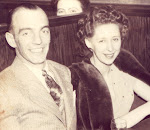
Way back in 1958 my Aunt Jeanie and Uncle Bill took me to the Ramsey County Fair. Imagine what happened to my ten year old ego when the St. Paul Sunday Pioneer Press published a picture of me! Apparently I even had to circle my own picture so I would recognize myself.

My aunt and uncle are at the very back of the picture. Bill is holding their oldest son, Rick, and Jeanie is obviously very pregnant. In fact, that baby, my cousin Maureen, was born on August 11th. I am so glad I found this picture today as Jeanie and Bill's youngest daughter, Patti, is getting married tomorrow. I know my Aunt Jeanie would be so proud and is looking down at Patti and smiling.

August 26th deadline for FGS Genealogy Conference

It has been almost a year since we began telling people about the 2009 edition of the Federation of Genealogical Societies Conference in Little Rock. The local host, the Arkansas Genealogical Society, is waiting for us. The Statehouse Convention Center is a beautiful place. Now it is less than 3 weeks till the conference begins on September 2d.

Four days of learning about genealogy, how to use the records, where to find the records, new online databases and digitized images, an Exhibit Hall full of things to browse, buy, subscribe, and join. Whew! The presenters at the scheduled sessions are among the top genealogists, librarians, and archivists. As always happens with FGS Conferences, the registrants are coming from all over the U.S. and some from Canada. If you are a beginner, this conference is the place for you. If you are already well into family history research, this conference will serve your needs, too. If you are at a point where you have already used all the "usual" resources, this conference even has sessions for you.
  • Online registration ends August 26th!
  • August 26th is the last day to add luncheons, the banquet and the Night at the Ballpark.
  • August 26th is the last day to register online for the APG PMC which is geared toward professional genealogists.
  • Yes, you may still register at the door. See you there.

13 August 2009

Appearance on Twin Cities Live

I did my bit on TV yesterday. The staff at Twin Cities Live was great. I took my almost 16 year old granddaughter with me. The male host of the show, John Hanson, took her to meet the afternoon drive on-air personalities, Moon & Staci, from KS95 radio station. Talk about a neat experience for a teen. I told her she owes me for life.

I jump at chances to share the wonderful experience of researching family history. If you are interested in seeing me in action in various places around the U.S. check the links in the right hand column for my upcoming appearances.

If you have any interest in seeing the segment, it is at: http://twincitieslive.com/article/stories/s1080536.shtml?cat=10698. The is supposed to be a link to an 11 page handout about genealogy that includes many live links. You can read this directly by clicking here.

National Archives Launches Blog

FOR IMMEDIATE RELEASE
August 13, 2009

NATIONAL ARCHIVES LAUNCHES NARATIONS BLOG
New blog to focus on online public access to records of the U.S. National Archives

Washington, DC . . . On Wednesday, August 12, the National Archives launched the NARAtions blog to begin a discussion with researchers on the future of online public access at the National Archives. The public is invited and encouraged to share opinions on ways to enhance the online researcher experience and to increase access to archival materials.

This online community will continue to be a work in progress as we develop new features and content. Questions will be posted to invite discussion, and the blog welcomes feedback and suggestions for new questions to raise. The blog will also inform researchers about newly available online records descriptions and digitized archival materials.

We would like to hear from you! What sort of things would you find valuable from NARAtions?

* Should we allow the public to tag descriptions in our online catalog? Why or why not?

* What groups of photographs should we post on Flickr next, and why?

* Do you have a favorite NARA photograph or document? Is it already available in our catalog or on our website?

The URL is http://blogs.archives.gov/online-public-access/. Please visit often and share this web address with others.

11 August 2009

Minnesota Genealogical Society Conference

The Minnesota Genealogical Society's North Star Genealogy Conference takes place September 18 & 19, 2009. The educational sessions will be held at the Minnesota Genealogical Society Library and Office location at concord Avenue in South St. Paul. The main speaker is Clare Mire Bettag, Certified Genealogist and Certified Genealogical Lecturer. Clare is a nationally known genealogical educator. I count Clare as a friend and colleague and she is a fantastic lecturer.

For all the details on Clare's presentations and some by other speakers visit the MGS website by clicking here.

August 12th on Twin Cities Live

If you happen to be within viewing range of Twin Cities TV station KSTP on Wednesday, August 12th, you might catch a glimpse of me on Twin Cities Live. The segment features two half-sisters who met because of "an afternoon on the Internet." Ancestry.com was apparently the impetus for the connection. The station wants me to tell the viewers how to get started in family history research. How much info can I squeeze into a few sentences? I do hear you folks laughing at the thought of me trying to say only a few sentences. I just happen to be overly passionate about the subject.

08 August 2009

Are you registered for the FGS Conference?

If you are registered for the FGS Conference in Little Rock, there is some exciting news for you on the Conference News Blog. Keep watching the blog for lots of news during August.

07 August 2009

Religious distribution in the U.S. today

Today's Boston Globe has a story about the distribution of religions in the U.S. today. You can read the entire story here. The story is accompanied by a series of maps showing the distribution of Catholics, Protestants, Jews, Mormons, and those who consider themselves non-religious. I saw a few states that surprised me, but overall the map is what I expected.

This is the work of the polling company, Gallup. Gallup has a more complete article here. The survey was compiled via telephone.

For historic religious distribution maps check these websites:
  • The Library of Congress website has scanned images of religious distribution in 1890.
Many such maps and atlases can be found in map libraries and in the reference sections of public, historical and university libraries.

1930 Census Free during August at Footnote.com

I received this press release from Footnote.com yesterday. Today on Facebook, Footnote.com is saying that they are receiving a lot of traffic and that the site is operating a bit slowly but they are working on improving it. Footnote is a great subscription site. Just browse their content list that is constantly expanding.


1930 Census Free Through the Month of August

Dear Footnote Member,

The 1930 US Census is one of the most powerful resources available to anyone who wants to learn more about their ancestors.

During the month of August, we're giving everyone free access to Footnote.com's one-of-a-kind, interactive 1930 US Census.

With Footnote's interactive census, viewing, downloading and printing images from the census are just the beginning. You can also add images and comments, spotlight interesting finds, create pages for your ancestors and tell their stories.

Let your family and friends know by simply forwarding this email to them or by pointing them to
http://www.footnote.com/1930census/

The Footnote Team

04 August 2009

Google expands its "News Archive Search"

Have you used Google's newspaper archive search? It is one of my favorite search capabilities for obituaries and other newspaper items. Many of the links that pop up are to other websites that require a fee. Many of these do have subscriptions for home users. Your public library may have subscriptions to these sites.

Google has also been digitizing newspapers and has recently quadrupled number of articles included in "News Archive Search."

Try some searches here.

See the full notice on Google's own blog.

Louisville Public Library floods

Libraries have so many challenges today. It's impossible to miss the stories online and in print that tell the drastic news of budget, staff, and hours cuts. Hurricanes and tornadoes still wreak havoc. The Louisville Free Public Library has now suffered flooding with "three feet of water in the basement" and "thousands of books have been damaged." Where does the money come from for such repair and replacement in today's economy?

Read the article in the Courier-Journal.com

03 August 2009

ANCESTRY.COM EXPANDS ONLINE JEWISH FAMILY HISTORY RECORD COLLECTION

This is a new press release from Ancestry.com:

Collaboration with the American Jewish Historical Society and the Routes to Roots Foundation offers online access to more than 200,000 Jewish records


PROVO, Utah, August 2, 2009 -- Ancestry.com, the world's largest online resource for family history, today announced an addition to its Jewish family history record collection through collaboration with two leading organizations committed to the preservation of Jewish heritage.

Ancestry.com has aligned with the American Jewish Historical Society (AJHS), which maintains millions of records that bear witness to the contributions of the American Jewish community to life in the Americas from the 16th century to the present, and Miriam Weiner's Routes to Roots Foundation (RTRF), an internationally-known firm that specializes in Jewish research in the archives of Eastern Europe. Through relationships with these two organizations, Ancestry.com is digitizing and putting online a unique collection of records that can now be searched alongside the large collection of Jewish records already accessible on Ancestry.com.

"Ancestry.com built the largest online collection of Jewish family history records last year, through its collaboration with JewishGen and the American Jewish Joint Distribution Committee," said Gary Gibb, Vice President of Content for Ancestry.com. "Now with the addition of records from the AJHS and Routes to Roots, Ancestry.com will be able to offer an even more diverse collection of Jewish-related documents that will help people discover their life story."

The American Jewish Historical Society documents that have been digitized as part of this relationship include six remarkable collections:
  • Brooklyn Hebrew Orphan Asylum Records, 1878-1934 - applications for admission; and discharge ledgers
  • Selected Naturalization Records, New York City, 1816-1845 - declaration of intention for New York County; contains name, age, birthplace, nationality, place of emigration, occupation and place of intended settlement
  • New York Hebrew Orphan Asylum Records, 1860-1934 - applications for admission; and discharge ledgers
  • Industrial Removal Office Records, 1899-1922 - records of Jewish families and individuals who were assisted in moving from harm's way in various countries
  • Selected Insolvent Debtor's Cases, 1787-1861 - approximately 2,000 cases, some containing an inventory of assets
  • Selected Mayor's Court Cases, New York, 1674-1860 - 6,000 selected briefs that include summons, complaints, affidavits, and jury lists
"We believe the value in the American Jewish Historical Society's extraordinary holdings lies not only in what we have, but in how we make it accessible," said Evan Kingsley, executive director of the AJHS. "Ancestry.com provides a new and important online access point that makes AJHS' archives that much more valuable. The more our collections are used, the better we're fulfilling our mission."

Ancestry.com has also put online Miriam Weiner's Routes to Roots' Eastern European Archival Database, a significant historical collection that includes references to Jewish and civil records from archival holdings in Belarus, Lithuania, Moldova, Poland and Ukraine.

"The Eastern European Archival Database is the result of a twenty-year journey to help record and preserve Jewish materials from five countries," said Miriam Weiner, founder of the Routes to Roots Foundation. "Through this important collection people will be able to discover a variety of documents including property records, census lists, vital records and Holocaust records, which will help them walk in the footsteps of their ancestors."

Along with the records from AJHS and RTRF, Ancestry.com will also launch two new collections from JewishGen, including Lithuania: List of Donors of Charity from HaMagid (1871-1872), the Persian Famine donation list printed in the Hebrew newspaper HaMagid, and Hungary: Jewish Census (1848), a survey of Jews in Greater Hungarian countries including Hungary, parts of Slovakia, Croatia, Ukraine and Romania, among others.

To search through all the new Jewish record collections and Ancestry.com's entire Jewish Family History experience visit http://www.ancestry.com/JewishFamilyHistory.

About the American Jewish Historical Society (AJHS)
Founded in New York City in 1892, the American Jewish Historical Society's holdings include 20 million documents, 50,000 books, paintings and other objects that bear witness to the remarkable contributions of the American Jewish community to life in the Americas from the 16th century to the present.

About the Routes to Roots Foundation
The Routes to Roots Foundation was established in 1994 with the goal to survey, study, research, inventory and document Jewish material, archives and Judaica in Eastern European archives. The organization fosters and promotes the study and preservation of Jewish genealogical material and assembles, catalogues, publishes and disseminates information from research and study of Jewish materials and compiles, maintains and updates library and/or archive of collections of Jewish historical, cultural and genealogical information.

About Ancestry.com
Ancestry.com is the world's largest online resource for family history and has digitized and put online over 4 billion records over the past twelve years. Ancestry users have created over ten million family trees containing over one billion profiles. Ancestry.com has local Web sites directed at nine countries, and more than 8 million unique visitors spent more than 5 million hours on an Ancestry Web site in May 2009 (comScore Media Metrix, Worldwide). For more information on Ancestry.com and its other family history resources, visit http://corporate.ancestry.com

26 July 2009

FGS Conference Registrants -- order paper syllabus in the next few days

Only a month left till genealogists descend on Little Rock!
In just a month, genealogists from all over the United States and beyond will be getting together in Little Rock for four full days of learning more about genealogy, finding cousins, seeing how much is online, seeing how much is not online, figuring out how to get the most out of records, determining what archives or libraries have the answers, helping your genealogy society, and spending some money in the large Exhibit Hall. Don’t let this event pass you by. The Arkansas Genealogical Society is the host for this event which is the annual conference of the Federation of Genealogical Societies. You will be hearing about this event for years to come and will feel sad if you weren’t a part of it.

Syllabus
The syllabus consists of the handouts from most of the lectures and each registrant receives it on CD at the Conference. If you wish to receive a paper copy of the syllabus in addition to the syllabus on CD you must order it no later than August 1st. It will also be online before the conference but some prefer to have the full paper copy at the conference. Just order it online at www.FGSConference.org when you register for the conference. If you have already registered, go back to the registration page and add the paper syllabus for $20.00 using the PIN number you received when you registered.

25 July 2009

Saturday Night Genealogy Fun - Good Genealogy Luck

I once heard it said that you make your own genealogy luck. That could be very true in the case of one instance of genealogy luck. Many years ago I had traveled to the Family History Library in Salt Lake City so that was my part in making my genealogy luck.

For years I had tried to find my German ancestors on passenger arrival lists and in other resources. I had many things that led to a determination of a 1856 U.S. arrival date. But nothing was panning out.

On that trip to the FHL, I was waiting for someone to join me so we could go to dinner. I was tired and while waiting was antsy and picked up a volume of Germans to America. I simply opened it to a page and there were my Germans! The Schleichers, Fishers, and Rohrs were right there, arriving in 1853, not 1856. The names left a bit to be desired in the abstracting, but now I had them. They left via Bremen - the records for Bremen were largely destroyed.

24 July 2009

Baseball and Genealogy

I grew up as one of three sisters with no surviving brothers. My Dad was a baseball fan and he took his daughters to baseball games. I remember outdoor baseball at Metropolitan Stadium in Bloomington, a suburb of Minneapolis, Minnesota. Some of those players I watched are now in the National Baseball Hall of Fame in Cooperstown, New York. Next week I will be visiting the Hall of Fame -- in fact I will be in Cooperstown this weekend for the annual induction ceremonies courtesy of a friend who lives in the town.

Today I am scrambling on the last day of research at the New England Historic Genealogical Society in Boston, Massachusetts before heading to Cooperstown. I had the good fortune to run into someone I haven't seen in years -- Robert Charles Anderson. Many of you may recognize his name as author of the NEHGS series The Great Migration.

Bob is also a baseball lover. Years ago he wrote a wonderful article on "Baseball Genealogy" in the quarterly of the Association of Professional Genealogists (Vol. 6, Fall 1991, page 59). I had missed his more recent article on "The Family of Asa Brainerd (1840-1888), Pioneer Professional Baseball Player" that was published in the New York Genealogical and Biographical Record (Vol. 138, 2007, pages 5-13). For anyone who wants some additional ideas on research techniques involving a family involved in baseball, you might want to check this article. Bob uses sound genealogical methodology in his quest for the correct story of the life and ancestry of Asa Brainerd. Part of Bob's work showed that previous articles and biographical material on Asa were incorrect. Authors and editors had copied from each other without verifying the details. It's like copying someone's online or published family tree without verifying the names, dates, places, and other info.

22 July 2009

A sign of the times and a call for help

I love it when things grow by leaps and bounds. Unfortunately, this time it isn't something to love. Historical societies, archives, state libraries, public libraries, and other places where family historians do their research are floundering. The number of those floundering due to drastic budget and staffing cuts in today's economy is what is growing by leaps and bounds. It's impossible to miss each new cut if you read genealogy and history newsletters, websites, ezines, blogs, and even Facebook. Many of my colleagues post such things on Facebook.

My own Minnesota Historical Society has done some of that staff cutting in 2009 and needed the support of historians and genealogists. One of the latest concerns is that of the excellent Michigan Historical Library and Archives in Lansing, Michigan. As in so many states and at the federal level in the U.S. and other countries, history is being lost when there are not funds to house and preserve it.

My friends Shirley Hodges and Liz Kerstens who are both Michigan residents are among those quite concerned about the recent changes in preserving that state's history. They are among those who are keeping the topic alive on Facebook. On July 13th, Governor Jennifer Granholm issued an executive order closing the Michigan Department of History, Arts and Libraries. Its functions are to be distributed among seven other departments and some outside groups, including possibly Michigan State University. The archives would be under the Department of Natural Resources! For more of the details check out Leland Meitzler's GenealogyBlog.com

Shirley has written an article on the issue and help needed in the July 23d issue of Global Gazette. She has asked her colleagues to please share it "with anyone who might be interested in the situation that we are facing regarding the Library of Michigan. We need all of the help that we can get."

She further added: "If you don't already subscribe to the Gazette, you should do so. It is free and comes via e-mail. It is published by Global Genealogy and has lots of wonderful articles and genealogy tips. They are wonderful friends to the genealogical community." Click here for details.

04 July 2009

Saturday Night Genealogy Fun: Fourth of July memories

I hope you took some time to remember the importance of the 4th of July and celebrated the freedom and independence of the United States. I feel fortunate to call this country my home.

Randy Seaver, blogger extraordinaire, is known for challenging his fellow bloggers or suggesting writing assignments on a variety of things. His Genea-musings of today has the usual Saturday Night Genealogy Fun. He wants his fellow Geneabloggers to write about the 4th of July.

1. Think of the best Fourth of July you remember from your childhood.
The best one was actually year after year of the same thing. Oh was it fun. Our neighbors, the Lindbergs, had a pool. We would swim all day, have hot dogs and hamburgers cooked by our dads, and then come back to my house to watch the fireworks. From our large backyard we could see the beautiful fireworks that used to be fired off from Highland Park in St. Paul. The oldest Lindberg sons and friends usually had their own bootlegged fireworks and the younger kids had sparklers. What a simple but so enjoyable day.

2. Think of the best fourth of July you remember from your adulthood.
When my parents sold their house, they moved into a condo that was directly across from Central Park in Roseville, a St. Paul suburb. The pool was indoors but their condo had a patio that fronted on to the park where another beautiful fireworks display took place. For several years the entire family gathered there to play, swim, eat, and watch the fireworks. It was more special because my own children got to experience the Fourth with one set of grandparents.

Several years ago my husband and I were in Washington, DC over the Fourth of July. It was a hot day but we watched the parade down the Mall, did a lot of walking around, saw other events, and I was so excited to be live at the nation's Capitol to watch the entertainment and the fireworks. Suddenly I was ill -- the horrible heat that day had taken a toll on me and we ended up going back to the apartment to watch the evening events. It's not the best, but one that almost was a very special one.

3. What did you do today?
I spent the morning with my oldest granddaughter as we finished assembling my new bookshelves. Well, honestly, I just assisted her. She did almost all the work while I did a variety of things. Then I took her home and came home to continue rearranging things in my living room and dining room. Cooked on the grill and am now watching "A Capitol Fourth" live from Washington, DC. In a little while I will venture outside to see if I can catch the fireworks from a nearby lake.

I hope your day has been both fun and relaxing.

03 July 2009

Staycation Research #1: Enlightment

Yes, the economy is changing our research. Libraries, archives, and courthouses are not open as many hours. Some knowledgeable staff members are no longer employed. We are not doing as much distance travel for research purposes. At the end of this summer I am traveling to Little Rock for the 2009 Federation of Genealogical Societies Conference. I don't want to miss that. On my way there and back I will be combining that and some on-site research in several localities. That is my big trip of the summer.

Most of the other summer and fall research time is being spent near home in what many have termed "staycations." I have already spent time at my nearby county branch library in the reference and history sections. What else can we do this summer and fall to stay nearer to home and save for the major trips?
  • Catch up on your reading. What historical and genealogical books sit on your shelves that you could pick up and actually read from cover to cover?
  • Have some relatives that are hesitant to share with you? How about just sending them a newsy letter or email telling them about what you have found on the past generations. Let them know what your branch of the family is up to. Ask them how their garden is doing or how the grandchildren are doing. Make it light and don't ask them for a single thing. This could also be called "buttering them up" for the requests you may make in a few months!
  • Does a local library (public, historical, and/or genealogical) give away duplicate books, periodical, or have a sale over the summer? Pick up some good historical and genealogical reading.
  • When did you last review the files on your Griffin family. Pull them out and you will be ready to travel some week in the future.
  • Volunteer in the local history room or archive so that others will find it open when they visit.
Watch for more ideas in future posts.